

Sailing to Pitcairn
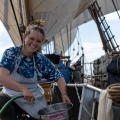

After facing a series of successive depressions, pushed north by the super El Niño that is currently throwing the Pacific’s stable climate into chaos, we have battled headwinds a total of 482 nautical miles from Rapa Nui, 423 of which have been in the right direction. A southernly swell rolls in, cradling us in a perpetual motion that some find sickening, and others soothing.


On deck, we have been busy with unfurling and setting and striking and furling as squalls loom over and ease past us. This cyclicality of sail handling is reminiscent of the cyclonic depressions themselves. There is a general air of surprise onboard, as we expected to have steady trade winds, neatly lined cumulus clouds, and calm turquoise seas as opposed to the salt spray and passing lashings of rain we now experience. There were two days where many of us regretted not bringing a warmer wardrobe.

The galley team, however, remain unfazed. Spectacular meals, cauliflower curry with fresh raita and naan, empanadas stuffed with wholesome stew, roast potatoes with sausages (or stuffed peppers for vegetarians), pineapple infused with vanilla and lime, chocolate pear crumble, are served to us on schedule, right when we need them. The deckhands contribute by baking fresh bread every night. This does wonders for morale, any hardship can be overcome with a belly full of hearty nourishment.


After pushing north of our desired course, we managed to skim over the depressions. Headwinds were becalmed, so instead of sailing on the wrong course, we strategically engine to make good ground for later sail. This meant that all sails needed to be struck and furled, and we braced the yards sharp to align with our direction of travel for minimum resistance and maximum fuel efficiency. The deck team hustled into the rig, accompanied by some of the more confident voyage crew, to tie the sails to the yards in neat bundles of canvas. We all manoeuvre differently in the rig. Rock climbers will be familiar with personality of movement- some people climb with fluid dynamism, others more rigid and static. All with great control. In the complex web of lines we dance inboard and out, arms full of gaskets and canvas, legs kicked back on the footropes, bellies leaned into the yards for balance. Periodically, we remind ourselves to appreciate the view- an expanse of ocean stretching in all directions before us, cut with swell and criss-crossed with wind ripples. Trained minds can read this fingerprint and understand its definitive weather patterns, but none can really appreciate the magnitude of distance they represent.


Footage from Fraser (our photographer)’s drone shows Europa from an outsider’s perspective – normally a view reserved for the calculating eyes of seabirds, providing a window into another world. The ship we are so intimately familiar with now appears to be a toy rocking in a borderless lagoon. What feels like our whole world is reduced to such vulnerability. The Pacific Ocean is so large that the area of all of earth’s landmasses could fit inside it with room for more. Viewed from the International Space Station, it is impossible to see its entirety at one time. We are a butterfly of canvas on a turbulent surface. As a crew, we rely wholly on one another for everything from fresh bedsheets to emergency responses. Together, we clean, steer the ship, prepare meals, and practice fire and man overboard drills. We are prepared for every eventuality we can think of. We are alone in this together. There is nothing like time at sea to bond people.
