

A Whale of a Time
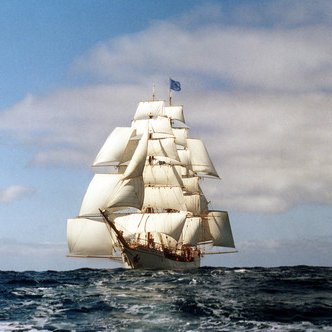

As we departed Ushuaia, a shout of “Whale!” sent us all rushing to the deck with our cameras. A dozen spouts and fins soon graced our voyage. Sei and humpback whales cruised the Beagle channel. As a sobering reminder of nature’s ways, a half day’s journey toward the open ocean, a behemoth of a beached humpback lay upon the shore and hundreds of birds had gathered for the unexpected feast.
Each day, even the sighting of a single spout sent most of the voyage crew rushing onto the deck in hopes of seeing it for themselves. That we had come from warm cabins and comfortable common areas on such short notice meant we were ill-attired for the chill wind sweeping along the deck, yet still we came.
On Day Nine, we entered Wilhemina Bay and afterward traveled to Orne Harbor, before continuing our way south through Neko Harbor and beyond. Humpbacks abound, cruising as slowly by our boat as the growlers, bergy bits, and occasional icebergs. Their hard puffs of breath marked by both spouts and the echoes off the surrounding glaciers.
But this is not a mere whale watching tour. By choosing to serve as crew on a sailing ship, we on the Europa have self-selected for those who wish to get closer to nature and to think harder about it.
Three days earlier, we went ashore on Deception Island in Whalers Bay. It was not named for the scenery. It was named for one of the most effective whaling stations of the twentieth century. For three decades, it processed up to five thousand whales per year. Despite the scarcity of remains—a few wrecked buildings, rusting storage tanks, and defunct blubber ovens—the echoes remain.

Wanted: Hardy men to travel to the far side of the world. Good wages.
The call to adventure and money worked. However noisome the labor, it was not perceived as evil. Instead, it fed 150,000 barrels of the finest oil to a hungry market every year. As the call for lamp oil, cosmetics, and food products grew, so did whale oil’s value. It was the petroleum of its day. At first the coastal whales of Europe were hunted, then the Arctic and finally, that most dangerous bastion, the Antarctic.
Whaler’s Bay and its equally productive counterpart on South Georgia Island didn’t end with bang, but rather a whimper. At first, instead of hauling the catch to these land-based processing locations, massive factory ships processed the catch directly from the ships. Cheaper petroleum is what ended most whaling, not some environmental putsch.


When the Europa’s captain announced that the water is two degrees warmer than normal below the Antarctic Convergence Zone. It is a clarion call, if we but knew how to answer it.
The whaling of old is a horror to modern-day eyes. The now-frequent extinction of entire species, overfishing to the point of population collapse, and the ever-expanding length of the endangered red list is a horror on a far grander scale. Yet it is so much easier to point the finger at the past than the present.
Most conversations over the next day wound around these topics. We discuss the irony of the fuel to reach Ushuaia from our distant homes—long flights necessary to board our mode of eco-travel. Those of us from coastal towns talk of plastic cleanup. The problems seem manifest as we each have a way of addressing some aspect of it. Others nod, affirming the idea’s validity. Myriad small actions of hope against the overwhelming task of understanding our modern dilemma to—
“Whale off the port bow!”
And we all rush onto deck, grabbing cameras first and coats later.