

Gerlache Strait

Trinity and Spert Islands, Mikkelsen harbour and Cierva Cove
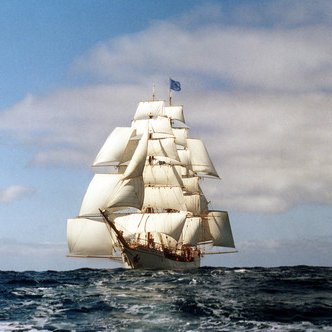
Last night, after readying the decks and cleaning our rubber boats from Deception Island’s grit, the Europa headed off the island to a long crossing of the Bransfield Strait. Our next destination, the shores of the Antarctic Peninsula. Like this, we leave behind the South Shetland Islands, and we open a new chapter on our voyage. Rough as it can sometimes be, the Bransfield Strait didn’t show much of its temper last night, allowing for quite a good passage. As the ship motors her way south, the scenery changes. High mountains covered by ice fields and glaciers frame an increasing number of drifting icebergs.

We head towards the meeting point of the broader Bransfield Strait and the narrower Gerlache Strait, named after the famous explorer who first explored these waters all the way back in 1898. Aboard the ship Belgica, Adrien de Gerlache was the leader of a scientific Expedition from Belgium, which also had the first ever Antarctic overwinter, though unplanned. They charted these areas and named about 88 geographical features.
Aboard was sailing a young Roald Amundsen, who 13 years later was the first one to step on the South Pole. Yet another renowned explorer, this one most famous for his discoveries and struggles in the Weddell Sea in 1901-04, Otto Nordenskjöld, sailed here too. During his Swedish Expedition, he charted areas on the west coast of the Antarctic Peninsula, including the spot where we drift this morning and lower our zodiacs for a scenic cruise, between the islands of Trinity and Spert.
What is to be seen there? Vertical basaltic cliffs framing narrow channels sprinkled by rocks and shallows. Here, many icebergs of any sort and kind get stranded after drifting in the Gerlache and Bransfield Straits.

Raw Antarctic beauty at its most, where penguins take a rest on the icebergs, where often (just like today) Leopard seals snooze over ice floes. A wide channel leads to an area where sculptural giant icebergs almost close the waterway, and around them, the cruise brought us to more confined and spectacular passages.
Once back aboard, the ship repositions just a bit further south, to the southern bay of Trinity Island, called Mikkelsen Harbour.
There, while she drifts again, we all go ashore at the so-called Bombay Island, tucked between glacier fronts and shielded by shallow reefs. Named after the whaling factory ship Bombay, which used the harbour as her base each season during the years 1910 to 1917, it was first charted by the French Antarctic Expedition under Charcot in 1908-10. Argentina established here a refuge hut and beacon here in 1954, which nowadays still stands, surrounded by countless Gentoo penguin nests.
For our afternoon visit ashore, the zodiacs dropped us close to the southeast tip of the islet, over the intertidal rocks. As the first ones come ashore, two humpback whales show up closeby. On land, Gentoos are to be found all around, where rounded rocky hills and outcrops protrude from a snowfield all around this small, largely flat island, with a surface of less than 1 square kilometre.
Walking along the coast, a Weddell seal is taking a good nap, and at the northeast beach, a large pile of whalebones next to a whale boat can be found. A picturesque site where we spent about two hours before calling back the zodiacs, which now deal with a coming tide amongst the rocks and shallows that characterize this spot.

With a bit of time left before ending the day, the ship resumes her way south now to pay an evening visit to Cierva Cove. The large Breget and Gregory glaciers debouch their ice in large and spectacular calving fronts into this bay, which, curiously, its toponyms relate to the early times of aviation adventures: Juan de la Cierva (1895-1936) was the Spanish designer of the autogiro, the first successful rotating-wing aircraft, in 1923. In 1907, the French aircraft designer Jacques Breguet built and flew the first helicopter to carry a man in vertical flight. Franklin Gregory was an American pioneer in the development and use of helicopters.
As we get deeper and deeper into the bay, high glaciated mountains surround us, while in the water, we found an increasing amount of brash ice, bergy bits, icebergs, including the largest one we have seen so far during our journey.
A handful of Weddell and Leopard seals rest on the scattered ice floes. At the closest point where the ship can safely approach the glacier fronts, the engines are turned off for a while, and she drifts while many of us climb aloft for a different view. Late at night, it is time to start our way again, southbound along the Antarctic Peninsula.


