

Gerlache Strait

Paradise Harbour zodiac cruise and landing at Neko harbour. Whalewatching at Andvord Bay
Paradise Harbour, an evocative name for this beautiful, large bay that was applied by whalers operating in this vicinity and was in use by 1920. This morning, this wide embayment sees us getting ready for a morning cruise with our small boats.
Besides the continuity of the large glacier fronts, stretching practically all along its coast, and the high mountains peeking through the fogs and clouds that now cover them, are now opening up, the bright orange buildings of the Scientific Research Station “Base Brown” catch our eyes.
Located on a rocky promontory of the hook-shaped Coughtrey Peninsula, it was established in 1949-50.


Actually, Argentina is the country with the largest time span of uninterrupted presence in Antarctica, all starting in 1904 with “Base Orcadas” at the South Orkney Islands, the oldest permanent station in Antarctica.
Not so old but still with a long history, “Brown” started operating as a whole year-round scientific post in 1951, but the work here had to stop in 1984 when it caught fire and part of the main facilities were destroyed. Not much later, it was reconditioned and, since then, has become a summer base for continuing the scientific research.
Just around the corner from it, and on the cliffs of the 79-meter-high rocky bluff with the appropriate name of Shag Crag, numerous Imperial shags nest. The adults come and go from the sea to take turns to feed their chicks, which already look pretty big and with their loud chirps incessantly keep demanding more nourishment.


Skontorp Cove, an embayment inside the wider Paradise Harbour, characterized by its calving tidewater glacier front tumbling down the steep, tall mountains at its back, was our next destination. Icebergs, bergy bits, growlers, they all fill up the area. On them, Gentoo penguins rest or just seem to play games, jumping up atop and then diving into the icy waters again and again. They share a couple of the largest idrifting icy bits with a bunch of Arctic terns, the birds that make the largest migration of all, from the breeding grounds up in the high Arctic to the Antarctic rich waters, where they spend the austral summer feeding before flying far north again.
In the meantime, a few Humpback whales feed in front of Skontorp Cove, swimming and diving along Paradise Bay.
Our way out of the harbour brought us to pass through the Aguirre Passage , the channel between Lemaire Island and Danco Coast. It was navigated by the ship Belgica (From the Belgium Antarctic Expedition in 1897-99). Visible as we pass by is a Chilean Station. In their Expedition to Antarctica, they named the passage after Don Pedro Aguirre Cerda (1879-1941), President of Chile, 1938-41.
From there, the ship heads towards the north to get into the next bay that indents the Antarctic Peninsula, Andvord Bay.


Also discovered by Gerlache, he named it for Rolf Andvord, Belgian Consul in Christiania (Oslo) at that time. Here, another landing at the continent itself was planned, at the beautiful Neko Harbour.
Neko toponym finds its origin in the whaling factory ship Neko, which started operating in the area as long ago as the 1911/12 season.
The waters are calm, and the weather is still good, not much ice fills up the bay, allowing for the ship to drift close to the coast amongst some large icebergs.
Ashore, paths for hiking up the hills and viewpoints over Gentoo penguin rookeries meander around some penguin highways. The rocky shoreline offers great opportunities for photographing the tide glacier that curves around Neko. As its front lies close to the landing site, it could be dangerous should any big chunks come off while we are on the beach. Big waves can easily grow tall in those shallow waters.
But as long as the conditions are good, a couple of corners at the beach are a favourite playground for the penguins. Many access land here and clean themselves before climbing to their nests. These areas are also preferred snoozing spots for Weddell seals, as we had today.
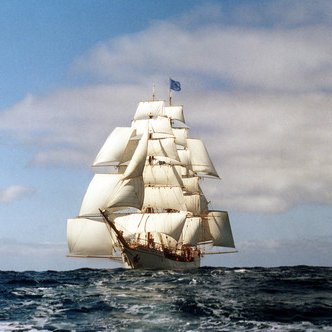
But the day was not over yet after the landing. As the Europa makes her way off Android Bay in the evening, numerous small groups of Humpback whales show up, now giving great chances for lying close by while they feed.
Yet another late night was ahead, as for a couple of hours we gathered on deck to see this fantastic spectacle, before the ship steers again southwards towards tomorrow’s new adventures.
